


Then they look at their sales data in heavily Jewish zip codes and wonder why a competitor with a fraction of their national presence is outselling them three to one in Lakewood and Boro Park.
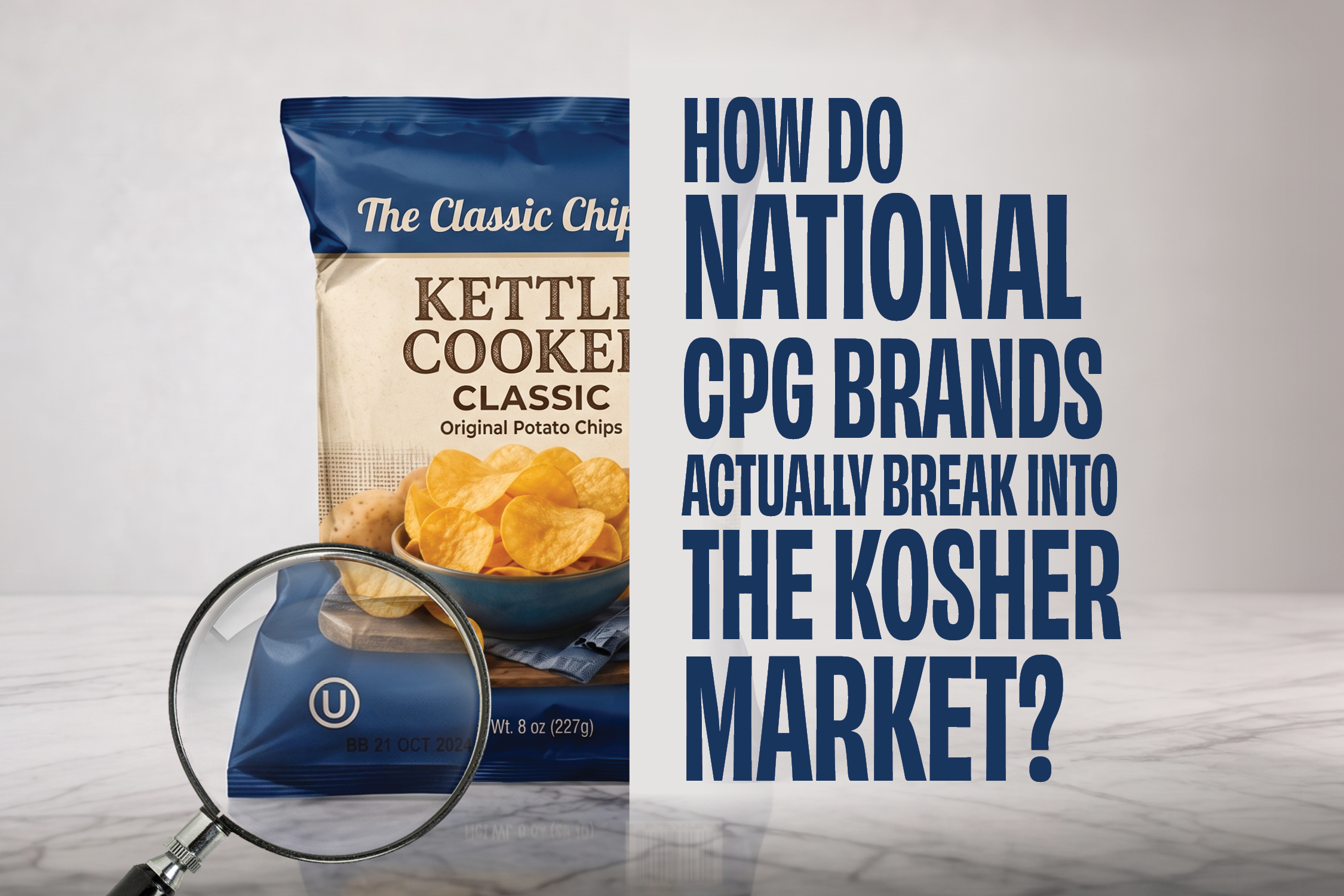
Kosher certification is the price of entry to the Jewish market, not a strategy for winning it. The brands that actually capture meaningful share in observant Jewish communities treat the kosher consumer as a distinct market with its own buying patterns, retail ecosystem, seasonal rhythm, and trust signals. The ones that treat certification as the finish line tend to leave most of the opportunity on the table.
Here's what actually drives success for a CPG brand entering this market.
Certification is necessary but it's only the starting line
Getting certified matters, and which certification you get matters even more than most brands realize.
- The various kosher certifying agencies carry different levels of trust in different communities. A hechsher (kosher certification mark) that's accepted everywhere opens more doors than one with limited community acceptance.
- Some products need separate certification for Pesach (Passover), when dietary rules tighten significantly. A brand that's kosher year-round but not certified Kosher for Passover disappears from observant kitchens for eight days during one of the highest-spending periods of the year.
- Dairy, meat, and pareve (neither dairy nor meat) status affects how a product fits into kosher meal planning. Brands that understand where their product sits in a kosher kitchen market it more effectively.
- Display of the certification matters. Orthodox consumers look for the symbol, and packaging that makes it easy to find performs better than packaging that buries it.
The kosher consumer shops in a different retail ecosystem
National brands optimize for mass retail and national chains. The observant Jewish consumer often shops somewhere else entirely.
- Kosher supermarkets and groceries in concentrated Jewish neighborhoods drive a large share of orthodox household spending. These stores are community institutions, and a brand's presence and positioning there matters more than its national shelf placement.
- Getting onto the shelf at the major kosher supermarket chains in Brooklyn, Lakewood, Monsey, the Five Towns, Los Angeles, and similar areas often does more for a brand in this market than a national endcap program.
- Relationships with the owners and buyers of these stores function differently than relationships with national chain category managers. These are often family businesses deeply embedded in the community.
- In-store presence in these locations doubles as community marketing. A product sampled at the right kosher supermarket before a major holiday can move through the community by word of mouth faster than paid media could carry it.
The Jewish calendar drives kosher purchasing more than any other factor
A national CPG brand plans around Q4 and back-to-school. The kosher consumer's purchasing calendar runs on the Jewish year, and the swings are dramatic.
- Pesach drives a massive kosher food purchasing spike, with observant families buying entirely separate products certified for the holiday. The weeks before Pesach are among the highest-volume kosher shopping periods of the year.
- Rosh Hashanah, Sukkos, Chanukah, Purim, and Shavuos each drive their own category-specific spending surges, from honey and apples to dairy to specific holiday foods.
- Shabbos happens every single week, driving consistent weekly purchasing of specific categories (challah, grape juice, prepared foods, and more).
- A brand that aligns promotions, displays, and new-product launches with this calendar rather than the general retail calendar reaches the kosher consumer when they're actually buying.
Large families change the unit economics
The observant Jewish household, especially in Yeshivish and Chassidish communities, is much larger than the American average, and that reshapes the math.
- A family with six to ten children buys in volume that resembles a small institution. Pack sizes, multipacks, and value formats that fit large-family consumption patterns perform well.
- Household brand loyalty in large families compounds. Winning one large family is worth several average American households in volume, and that family's recommendation carries weight in the community.
- Bulk and club-format purchasing is common, which affects packaging, pricing, and where the brand needs to be available.
Trust signals and community presence close the sale
In the kosher market, the same product can win or lose based on whether the brand reads as authentically part of the community or as an outsider passing through.
- A brand that advertises in Jewish print weeklies, sponsors community events, and shows up consistently signals commitment, which the community rewards with loyalty.
- Endorsements and word-of-mouth within community messaging groups (WhatsApp and texting groups) and at the kosher supermarket carry more weight than national advertising.
- Heritage matters. A brand that's been on orthodox Jewish tables for decades benefits from generational loyalty that's very hard for a new entrant to dislodge quickly, which is exactly why new entrants need to invest in building that trust deliberately.
- A brand that gets the cultural details right (calendar timing, appropriate imagery, correct language) reads as a brand that belongs, while small mistakes mark it as an outsider.
The opportunity for brands that do it right
The kosher market rewards brands that treat it seriously, and it's larger and more durable than the raw Jewish population number suggests.
- The kosher consumer base extends beyond observant Jews to include many others who buy kosher for health, dietary, allergy, or religious reasons, making the addressable market significantly larger than the Jewish population alone.
- The observant Jewish segment is growing, with large families and a young median age, meaning the future kosher market is already expanding on a predictable curve.
- Brand loyalty in this market is unusually durable, so the cost of winning a household is offset by years or generations of repeat purchasing.
- Competition for dedicated kosher marketing is still limited, so brands that invest now can establish category leadership before the space gets crowded.
The bottom line
A national CPG brand doesn't win the kosher market by certifying a product and waiting. It wins by treating the kosher consumer as a distinct market: getting the right certification, showing up in the right retail ecosystem, marketing according to the Jewish calendar, fitting large-family buying patterns, and building genuine community trust.
The brands that do this find a concentrated, loyal, growing consumer base that rewards commitment with the kind of durable loyalty that's become rare in general consumer markets. The brands that stop at certification keep wondering why the shelf space they paid for isn't moving.
For definitions of any unfamiliar terms, see our Jewish marketing glossary.


