
Travel and hospitality brands tend to think they understand the Jewish travel market because they know two things: some travelers keep kosher, and Israel is a popular destination. Both are true, and both barely scratch the surface.
Learn More
A retail brand opening a store in a Jewish neighborhood, or trying to win Jewish shoppers in a market it already serves, faces a set of conditions that national retail playbooks don't prepare it for. The hours are different. The peak seasons are different. The product mix that moves is different.
Learn More
Healthcare is one of the most sensitive industries to market to any community, and the Jewish market raises specific considerations that national healthcare brands, hospital systems, and practices routinely overlook.
Learn More
Financial services should be a natural fit for the Jewish market. The communities are concentrated, often high-income, deeply networked, and they make significant financial decisions around large families, real estate, education, and business ownership. A bank, wealth manager, insurance company, or financial advisor that wins trust in these communities gains customers who stay for decades and refer their entire extended network.
Learn More
Real estate is one of the most geographically concentrated industries that touches the Jewish market, which should make it one of the easiest to target well.
Learn More
Most national consumer packaged goods brands already have kosher certification on at least some of their products. The certification mark sits quietly on the package, and the brand assumes that's enough to reach Jewish consumers.
Learn More
Most marketing teams treat cultural review as a checkbox at the end of the process. The creative is built, the media is bought, the campaign is days from launch, and someone finally sends the work to a Jewish reviewer for a quick look. The reviewer flags an issue. Now the team has a choice: fix it and miss the launch date, or launch it anyway and hope no one notices.
Learn More
There's a single word that tells a Jewish reader more about a brand than the headline, the imagery, or the offer combined: the spelling of Shabbat. The choice between Shabbat and Shabbos, between Hanukkah and Chanukah, between synagogue and shul, is more than a stylistic preference. It's a tribal marker. The wrong choice signals the brand doesn't know who it's talking to, even if everything else about the campaign is right.
Learn More
Most American consumer markets run on weak loyalty. Customers shop on price, switch on convenience, and follow whichever brand showed up most recently in their feed. CMOs build customer acquisition strategies because retention is hard and lifetime value is shorter than anyone wants to admit.
Learn More
National brands tend to think about the Jewish market the way they think about other small ethnic segments: nice to have, hard to size, probably not worth a dedicated strategy. The population is around 7.5 million people, less than 2.5% of Americans, and that headline number is enough to keep most marketing leaders from looking deeper.
Learn More
There's a moment most national brands experience after launching into the Jewish market for the first time. The campaign goes live, the media plan is running, and then something happens that doesn't show up in any dashboard.
Learn More
Most marketing playbooks assume a clear hierarchy of channels. Paid digital drives awareness, performance media drives conversion, owned and earned channels support the rest. For most American consumer segments, that model works. For the Jewish market, especially the Orthodox segments, the hierarchy is different.
Learn More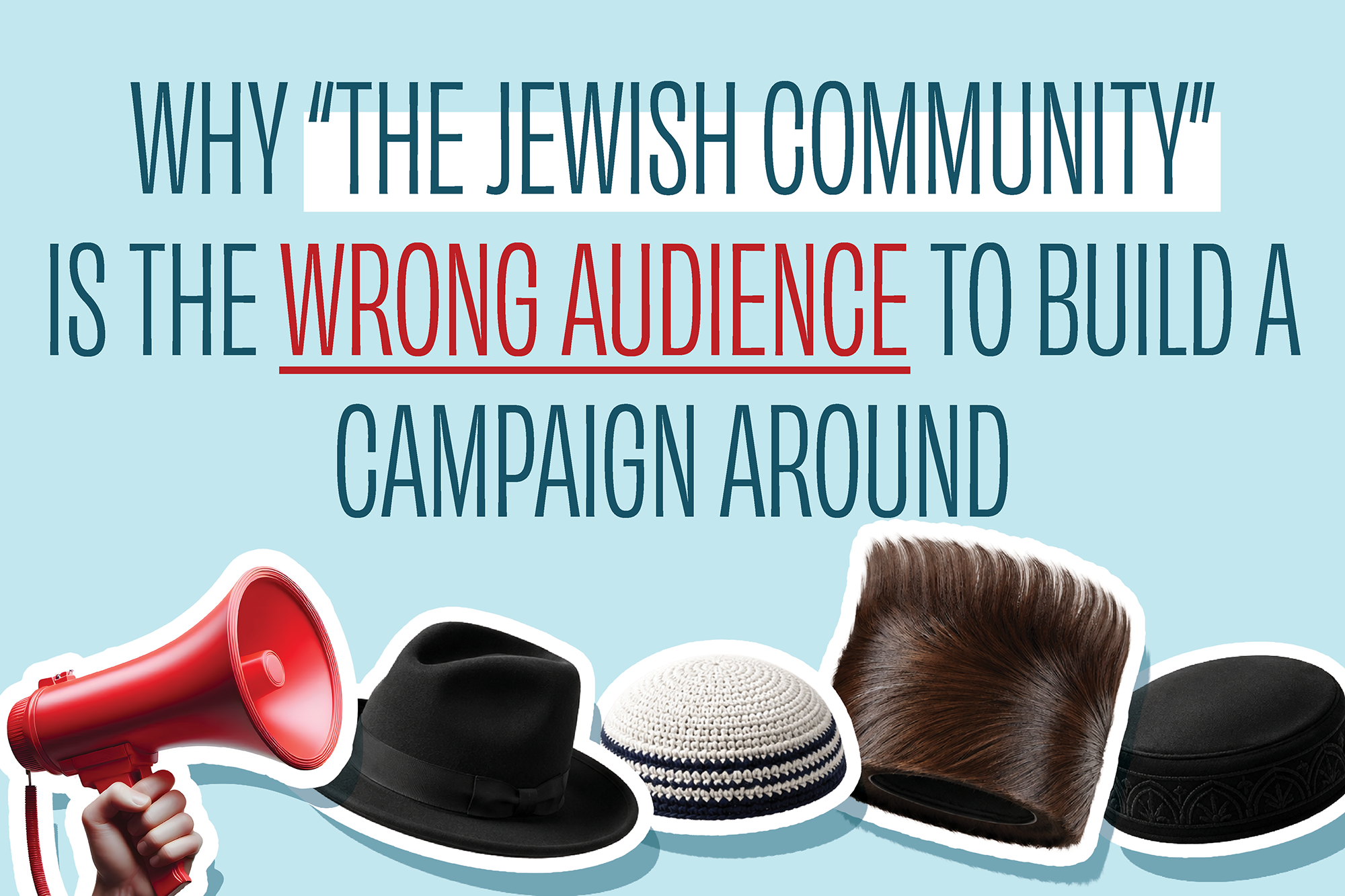
Most marketing briefs aimed at Jewish consumers start with a phrase that quietly dooms the campaign before a single asset gets built: "the Jewish community." It sounds reasonable, even respectful. The problem is that it describes an audience that doesn't actually exist as a single buying group.
Learn More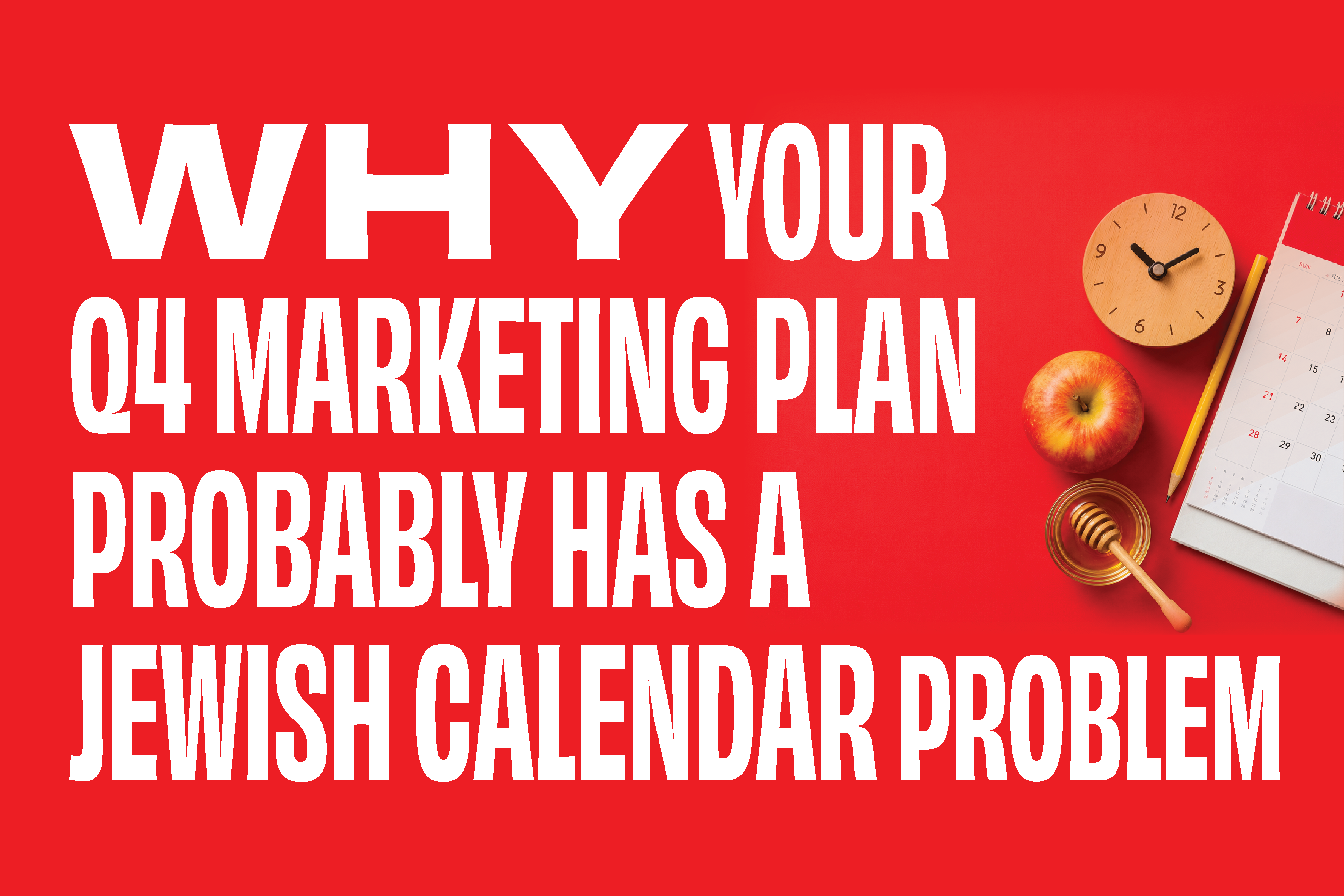
Most national marketing calendars are built around the Gregorian year. Q1 push, summer slowdown, back-to-school, holiday season, end-of-year close. It's the rhythm every American CMO knows by heart.
Learn More
Most marketing leaders evaluating an agency for a Jewish campaign use the same RFP they'd use for any vetted vendor: capabilities, case studies, pricing, timeline, references. The questions are fine. They just miss the things that actually determine whether a Jewish campaign succeeds or quietly bombs.
Learn More
Every year, brands miss the mark with Jewish audiences because they assume the same multicultural playbook applies here. The culture, values, timing, and messaging nuances are different and campaigns that overlook them rarely connect the way they’re intended to.
Learn More


