


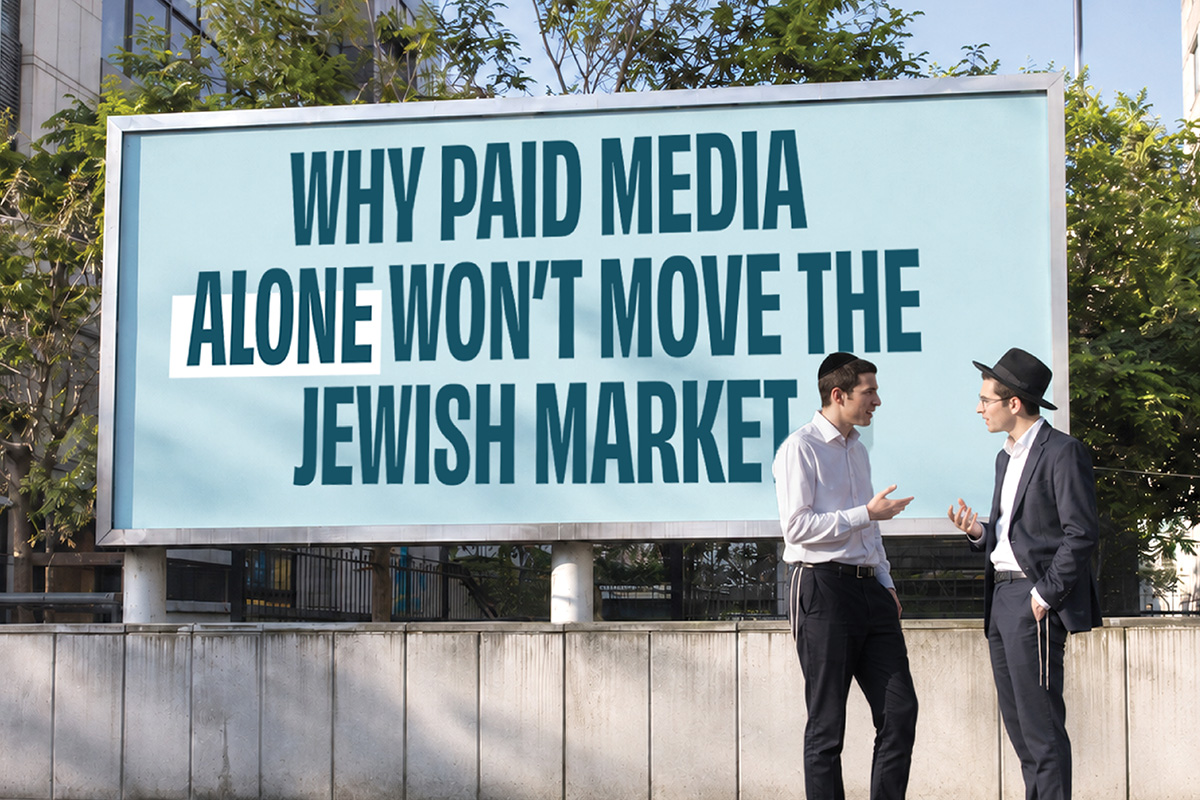
The single most powerful marketing channel in this market is something money can't directly buy: a recommendation from someone the audience already trusts.
A rabbi's endorsement, a feature in a respected community publication, a message from a school principal in a class WhatsApp or text group, a mention in a synagogue bulletin, a recommendation from a respected community member at a Shabbat (the Jewish Sabbath, Friday sundown to Saturday night) table. These trusted-messenger channels often move product faster than seven-figure digital campaigns. Brands that understand this build their Jewish marketing around it. Brands that don't burn through paid media budgets wondering why the audience isn't responding.
Here's how the trusted-messenger model actually works in this market and how to use it.
Why trust beats reach in tight-knit communities
The Jewish market, especially the Orthodox segments, runs on dense social networks. People know each other, talk to each other, and rely on each other for recommendations in ways most American consumer segments don't.
- A typical Orthodox family is connected through school, shul (synagogue, in Orthodox usage), neighborhood, extended family, and simchas (joyous occasions like weddings and bar mitzvahs) to dozens of other families they see weekly.
- Messaging groups for schools, neighborhoods, and shuls (WhatsApp in most communities, SMS texting groups where kosher phones are common) carry product recommendations, service referrals, and reviews to hundreds of families instantly.
- Word travels in hours, not weeks. A bad experience with a vendor can shut down their business in a single neighborhood very quickly.
- Conversely, a good recommendation from a respected voice can sell out a product in a single weekend.
In this environment, a stranger's ad has limited credibility. A trusted person's word has nearly unlimited credibility.
The trusted messengers worth knowing
The list varies by segment, but the categories are consistent.
- Rabbis and rebbeim (Hebrew plural for rabbis, often used for teachers) with public profiles. A respected rabbinical figure's haskama (endorsement) on a product, book, or service can drive significant adoption, especially in Yeshivish and Chassidish segments.
- School administrators and principals. Day school and yeshiva (Jewish institution for advanced religious study) leadership send messages to entire parent bodies regularly. A recommendation in that channel reaches every parent in the school.
- Community publications and their editors. A profile or column mention in a respected Jewish print weekly carries the credibility of editorial endorsement, which paid placement can't buy.
- Local community askanim (community organizers and lay leaders). In tight communities, certain individuals are known to "know everyone" and their referrals carry weight.
- Frum (religious) influencers on social platforms. A growing segment of Jewish content creators on Instagram, TikTok, and YouTube has authentic reach into specific demographic slices, especially Modern Orthodox women and younger families.
- Kosher supermarket owners and managers. In a community where everyone shops at the same handful of stores, the people who run those stores are also gatekeepers of consumer attention.
- Camp directors and program heads. Summer camps reach thousands of families annually and director endorsements carry real weight.
How to use trusted messengers without backfiring
The same channels that can launch a brand can also reject it. Trusted messengers are protective of their credibility, which is the entire reason their endorsement matters. Approaches that work in mainstream influencer marketing often fail here.
- Don't lead with a fee offer. Paying a respected rabbi to endorse a product comes off as transactional and disrespectful. Most credible voices in this market won't accept paid endorsements at all.
- Build a real relationship first. Most successful trusted-messenger placements come from genuine connection over time, not cold outreach.
- Bring something worth endorsing. Trusted voices stake their name on what they recommend. The product or service has to be genuinely good and genuinely fit the community's needs.
- Respect the editorial line in publications. Buying ads in a Jewish print weekly is one thing. Trying to influence editorial coverage is another, and gets noticed quickly.
- Match the messenger to the segment. A Modern Orthodox influencer endorsing a product to a Yeshivish audience signals the brand doesn't understand who's who.
The institutional channels that act like trusted messengers
Beyond individual people, several institutional channels carry the same credibility-by-association power.
- Synagogue bulletins and announcements. A mention from the bimah (the platform in a synagogue where the Torah is read) or in a shul newsletter reaches a defined audience with implicit endorsement.
- School newsletters and parent emails. Day schools, yeshivas (Jewish institutions for advanced religious study), and Bais Yaakovs communicate with parent bodies regularly and a brand mention in those channels reaches a captive, trusting audience.
- Camp brochures and parent communications. Camp families are highly engaged and the camp's voice carries authority.
- Community organization newsletters. Federations, JCCs, Chabad houses, and community service organizations all maintain their own communications channels with high open rates within their audiences.
- Chesed (charitable) organizations. Sponsoring meaningful work through respected community organizations creates brand association with values the audience cares about.
Where trusted-messenger marketing usually fits in the mix
For most national brands entering the Jewish market, the strongest play is trusted messengers as the credibility layer underneath broader paid media.
- Paid digital and Jewish print media build awareness and reach.
- Trusted-messenger placements provide social proof and credibility that closes the loop.
- A consumer might see the ad in a Jewish print weekly three times, then hear about the product from another mom at pickup, then see a school newsletter mention, then buy.
- The paid media alone wouldn't have converted. The trusted messengers alone wouldn't have reached enough people. The combination works.
A useful planning question for any campaign: who are the five to ten people in this segment whose recommendation would matter, and what's our path to earning their genuine support?
The bottom line
In the Jewish market, paid reach buys you the chance to be considered. Trust is what closes the deal. National brands that treat trusted messengers as a nice-to-have on top of a digital plan tend to underperform. Brands that build their strategy around trust and use paid media to amplify it tend to find that the math works very differently than the general market predicted.
The agencies that win in this market aren't always the ones with the biggest media buys. They're the ones with the deepest relationships and the cultural fluency to know whose voice actually matters and how to earn the right to use it.
For definitions of any unfamiliar terms, see our Jewish marketing glossary.


