


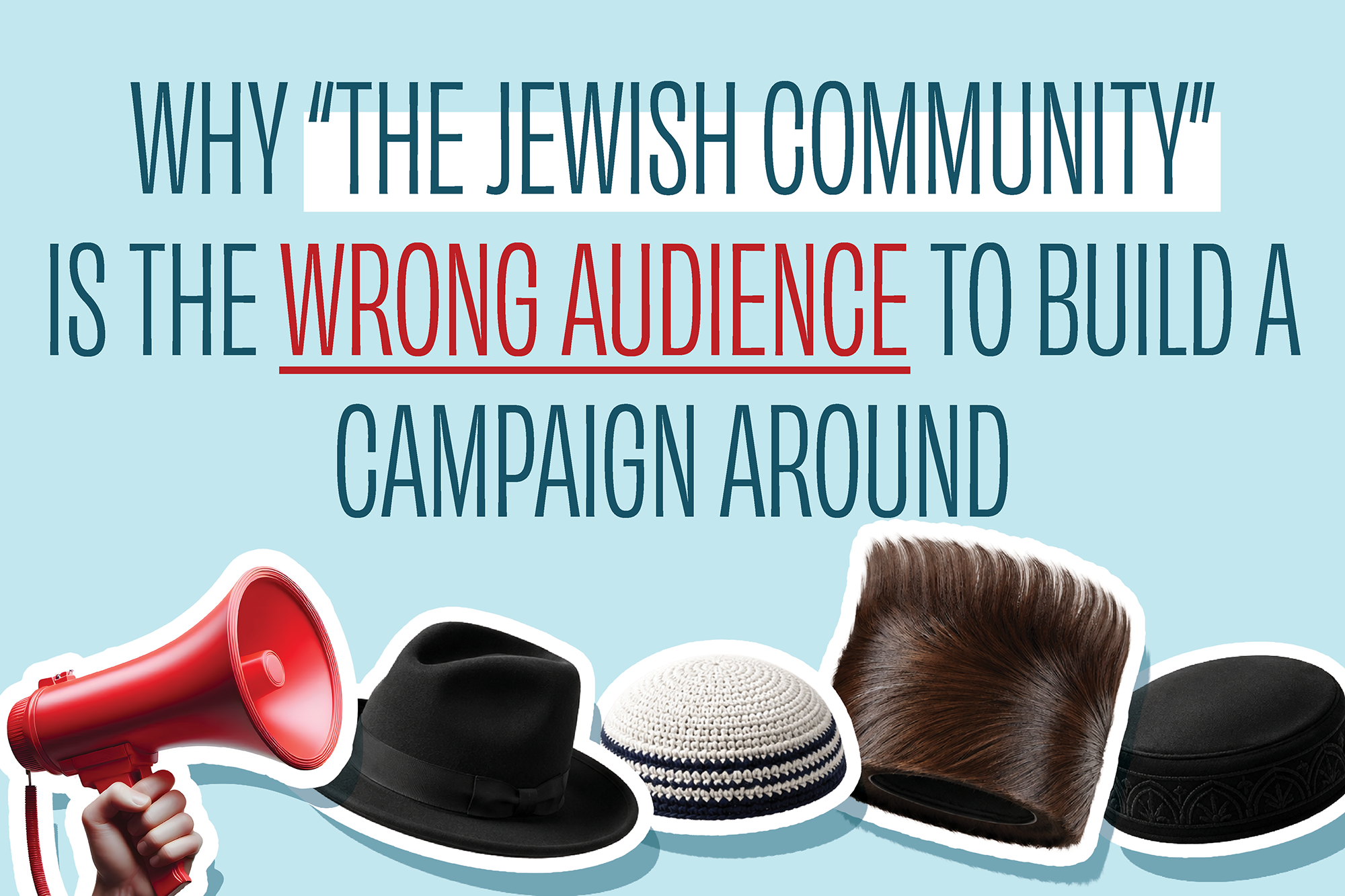
The American Jewish population, around 7.5 million people, breaks into at least six distinct consumer segments. Each one has its own media habits, its own language and transliteration preferences, its own shopping patterns, its own trusted voices, and its own price sensitivity. A campaign built for all of them at once usually reaches none of them well.
The good news is that once you understand the segments, the strategy gets clearer fast. Geography, language choices, channel mix, and creative direction all start to fall into place. Here's the breakdown every marketer should have before building a Jewish-targeted campaign.
Modern Orthodox
Modern Orthodox families combine full religious observance with deep engagement in mainstream American life. They keep kosher and Shabbat (the Jewish Sabbath, Friday sundown to Saturday night), send their children to Jewish day schools, and also work in corporate America, watch general entertainment, and travel widely.
- Geographic centers include Teaneck, Englewood, and Bergenfield in New Jersey, the Five Towns and Riverdale in New York, Sharon and Brookline in Massachusetts, and parts of Los Angeles, Miami, and Atlanta.
- Income tends to be high. Day school tuition alone runs $25,000-$40,000 per child per year, which sets a financial floor for most families in the segment.
- Media habits blend mainstream digital (Instagram, podcasts, streaming) with Jewish-specific channels (Jewish print weeklies, community messaging groups).
- Brand language uses "Shabbat," "Hanukkah" more than "Chanukah," and "synagogue" more than "shul"
- Responds to high-quality general-market creative with thoughtful Jewish customization rather than Hebrew sprinkled on top.
Yeshivish
The Yeshivish community is more insular than Modern Orthodox, with stronger boundaries between secular American culture and community life. Education is centered on yeshivas (Jewish institutions for advanced religious study) and Bais Yaakov schools. Many men learn full-time in kollel (full-time Torah study institution for married men) for years after marriage.
- Geographic centers include Lakewood, New Jersey (the largest Yeshivish community in the world outside Israel), Brooklyn neighborhoods like Flatbush and Boro Park, Monsey in New York, Baltimore, Cleveland, Chicago, and Toronto.
- Family sizes are large. A typical household might have six to ten children.
- Media is heavily print-based. Jewish print weeklies are read across the segment. Community messaging groups (WhatsApp where smartphones are common, SMS texting groups where kosher phones are used) carry enormous reach.
- Most homes do not have unfiltered internet. Smartphones are often filtered. General social media has limited penetration.
- Language reads "Shabbos," "Chanukah," and "shul." Yeshivish English includes Hebrew and Yiddish words used naturally in conversation.
- Visual modesty norms are strict. Photos of women dressed immodestly, mixed-gender imagery, or anything reading as risqué will end a campaign immediately.
- Trusted messengers carry more weight than paid media. A rabbinical endorsement or a recommendation in a respected publication moves product faster than digital spend.
Chassidish
The Chassidish community is the most insular of the major Orthodox segments, with the strongest cultural and linguistic distinction from mainstream American life. Yiddish is the primary language in many homes. Communities are organized around specific dynasties, each with its own customs.
- Major groups include Satmar, Bobov, Belz, Skver, Vizhnitz, Lubavitch (Chabad), and many others. Each has different norms and shouldn't be addressed as one block.
- Geographic centers include Williamsburg and Boro Park in Brooklyn, Monsey, Kiryas Joel, New Square, Monroe, and Crown Heights in New York.
- Yiddish-language print publications have heavy reach in segments where digital media barely penetrates.
- Visual codes are highly specific. Men's hats, coats, and beards vary by group. Women's head coverings and dress codes also vary. Generic Chassidish imagery often signals outsider quickly.
- Most consumer marketing targeting this segment runs through community newspapers, posters in shuls (synagogues, in Orthodox usage) and grocery stores, and direct mail.
- Lubavitch is a partial exception. Chabad's outreach mission means Lubavitch consumers often engage more with mainstream digital than other Chassidish groups.
Sephardic and Persian
The Sephardic and Persian Jewish communities trace their roots to the Middle East, North Africa, and the Mediterranean rather than Eastern Europe. Cultural norms, food traditions, naming conventions, and religious customs differ from Ashkenazi communities.
- Geographic centers include Brooklyn (especially the Syrian community in Gravesend and Midwood), Great Neck (large Persian community), Beverly Hills and the broader Los Angeles area, and Deal, New Jersey in the summer.
- Many Persian Jewish families maintain strong ties to extended family networks and make purchase decisions communally.
- Income skews high in many of these communities. Real estate, jewelry, hospitality, and luxury categories see disproportionate spending.
- Marketing in these segments often runs through community-specific channels: Persian Jewish event sponsorships, Sephardic synagogue partnerships, and family-network referrals.
- Generic Ashkenazi imagery (a Polish-style chossid (member of a Chassidic community), a matzo ball soup reference) reads as off in these communities.
Russian-speaking Jewish Americans
Russian-speaking Jewish Americans, mostly first and second generation immigrants from the former Soviet Union, form a distinct segment with its own media ecosystem.
- Geographic centers include Brighton Beach and parts of Brooklyn, Queens, parts of New Jersey, South Florida, and the Chicago area.
- Russian-language media still has reach in the first generation. The second generation reads English but often retains cultural and food preferences from home.
- Religious observance varies widely. Many are culturally Jewish but not religiously observant.
- Marketing approaches that work for American-born Jewish audiences often miss this segment entirely. Tone, imagery, and even humor norms differ.
Conservative, Reform, and culturally Jewish
The largest single Jewish segment by population is non-Orthodox: Conservative, Reform, Reconstructionist, Renewal, and culturally or secular Jewish consumers.
- Geographic distribution is wide. Major populations live across every metro area in the country.
- Media habits look much like general American media habits, with Jewish-specific layers (national Jewish publications, regional Jewish newspapers, Jewish podcasts).
- Religious observance ranges from synagogue-affiliated weekly attendance to once-a-year High Holiday participation to no formal observance.
- This segment responds to general-market quality creative with thoughtful Jewish themes. Heavy religious imagery often misses. Cultural identity, family, history, and Israel resonate more than ritual.
The bottom line
Jewish marketing is a portfolio of decisions about which segments matter most for your brand, which channels reach them, which language they expect, and which trusted voices move them.
The brands that succeed in this market name the segment they're targeting before they write a single line of copy. The brands that struggle build "Jewish creative" and hope it travels. It rarely does.
For definitions of any unfamiliar terms, see our Jewish marketing glossary.


